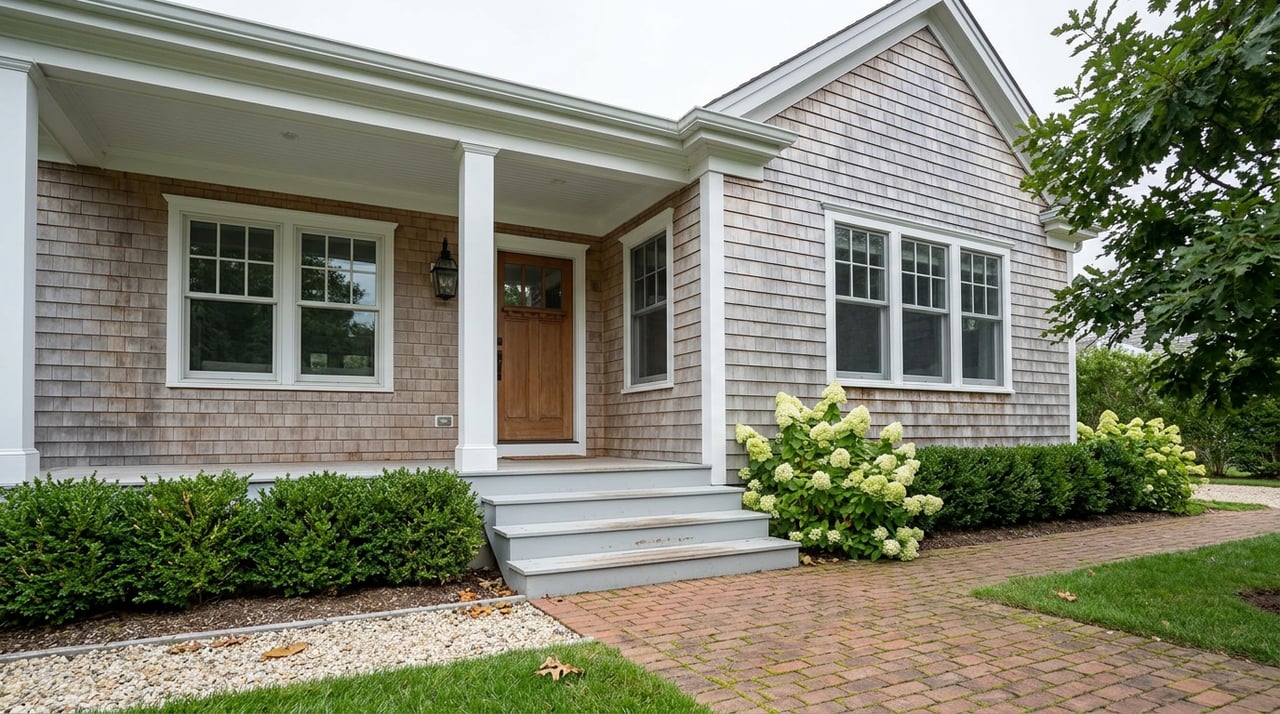
A buyer under contract on a home just off Main Street in Frankford got a call from her lender two weeks before closing: she needed a water test. Her seller, who had lived in the house for eleven years, had never had one done. Neither had the seller before that. Nobody was lying. Both were right, because in Frankford, whether you need a water test, a septic inspection, both, or neither depends entirely on which of three overlapping utility systems your specific parcel sits inside.
Most people assume a small Sussex County town has one water source and one way of handling wastewater. Frankford has three, and they don't line up with each other the way you'd expect.
Why "Well and Septic" Isn't the Default Answer Anymore
For most of Frankford's history, town water meant town water. That changed in April 2020, when the Town Council finalized the sale of Frankford's municipal water system to Artesian Water Company. The town is no longer responsible for billing, operating, or maintaining that system. If your home is inside the old municipal service area, your water provider is a private utility company, not the town, and your monthly bill, service calls, and quality reports all route through Artesian rather than Town Hall.
That's the water side. Wastewater runs on a completely separate map.
Frankford sits inside what Sussex County calls the Dagsboro-Frankford Sanitary Sewer District, one of the county's Unified Sanitary Sewer District service areas. Being inside that district doesn't mean every home is already connected. It means the county has built out sewer infrastructure to some parcels, is planning to extend it to others, and has left plenty of homes on private septic in the meantime, sometimes on the same road.
Layer those two maps and you get three real configurations a Frankford buyer can walk into:
- In town, on Artesian water, connected to county sewer. No septic to inspect. No well to test.
- In town or nearby, on Artesian water, still on private septic. Water is someone else's problem. Wastewater is yours, and it's regulated.
- Outside both service areas, on a private well and private septic. You own the entire system, water and waste, start to finish.
Three neighbors on the same street can fall into three different categories, and each one changes what has to happen before you can close.
The Inspection That's Actually Mandatory
If a property is still on private septic, Delaware doesn't leave the inspection question up to the buyer's discretion. A Class H septic inspection, approved by DNREC, is required for the sale, and it's a real evaluation, not a formality: it covers flow verification, tank integrity, baffle and tee condition, a full drain field inspection, and sludge level measurement, performed by a certified inspector who produces a written report for the file.
That part is well understood by most agents and most title companies working this corridor. What catches buyers off guard is the requirement that isn't there.
The Test Nobody Mentions Until the Lender Does
Delaware does not require a water test to drill a new well or to build a new home on one. The state treats water quality as the homeowner's responsibility, not a permitting condition. That means a seller who has lived on a private well for a decade may genuinely have never had the water tested, and there's nothing irregular about that.
Where this becomes a closing problem is financing. FHA loans, in particular, require a water test as a condition of the loan, even though the state itself imposes no such requirement on the property. A cash buyer or a conventional buyer might close on that same well without ever ordering a test. An FHA buyer on the identical house, on the identical well, is contractually required to get one, and if nobody flags that early, it becomes a scramble in the final two weeks of escrow rather than a line item planned for from the start.
This is the gap that catches out-of-state buyers especially hard. They've come from places where water testing is either standard practice or a flat requirement, and they assume Delaware works the same way. It doesn't, until their loan type says otherwise.
What Each Scenario Actually Requires
| Configuration | Water source | Wastewater | Inspection required | Common lender wrinkle |
|---|---|---|---|---|
| In town, on sewer | Artesian Water Company | County sewer (Dagsboro-Frankford district) | None for water or septic | None specific to utilities |
| In town or nearby, still on septic | Artesian Water Company | Private septic | Class H septic inspection (state-mandated) | None for water |
| Outside both service areas | Private well | Private septic | Class H septic inspection (state-mandated); water test only if lender requires it | FHA/VA typically requires a water test even though the state doesn't |
The septic inspection column doesn't change. The water column is where surprises live, and it depends entirely on loan type, not on the property itself.
The Sewer Connection Isn't Free, and It Isn't Optional Once It Arrives
There's a second wrinkle specific to homes still on septic inside the Dagsboro-Frankford district: once public sewer becomes available to a property, county code doesn't treat hookup as optional. Where public sewer is provided within a Sussex County sanitary sewer district, maintaining a septic tank or cesspool becomes unlawful, and the property owner is required to connect and abandon the private system.
That connection has historically carried a real cost. A 2007 county rate ordinance set the connection charge for the Dagsboro-Frankford district at $5,517 per equivalent dwelling unit. Rates get revisited over time, so anyone evaluating a specific parcel should confirm the current figure with Sussex County's Utility Permits office rather than assume that number still holds, but the principle hasn't changed: when sewer reaches your line, connecting isn't a courtesy notice, it's a requirement, and it comes with a bill.
The county has a safety valve for people who get caught in bad timing. Sussex County's Septic System Relief program offers financial assistance to owners who installed or upgraded a septic system within five years of the county's final mandatory sewer connection date for their area, provided their liquid assets and non-primary real estate fall under a $15,000 threshold. In plain terms: if you just paid to fix your septic system and the county then requires you to connect to sewer anyway, there's a program built specifically for that situation, though it's need-based and won't apply to every seller.
What This Means Before You Write or Accept an Offer
None of this shows up cleanly on a listing sheet. A Frankford property description will tell you the lot size and the bedroom count. It won't tell you whether the parcel is inside the sewer district boundary, whether it's already connected, or whether the well on the property has ever been tested for anything.
Before you write an offer, it's worth asking directly: is this property connected to county sewer, and if not, is it inside the district boundary where a future connection requirement could apply. Before you accept one, it's worth knowing your buyer's loan type early, because an FHA buyer's water test requirement is not something you can negotiate away once it's underwritten into the loan.
FAQ
Does every home in Frankford need a septic inspection to sell? Only if it's still on private septic. Homes connected to county sewer through the Dagsboro-Frankford district don't need one, since there's no septic system to evaluate.
If I'm paying cash, can I skip the water test? Legally, yes, since Delaware doesn't require it. Whether it's wise is a separate question. Cash buyers who skip it are accepting water quality on faith rather than documentation.
What happens if county sewer becomes available after I've already bought the house? Under county code, you'd be required to connect and abandon the septic system, and the connection carries a per-unit charge. If you'd recently upgraded your septic system before that requirement hit, the county's Septic System Relief program is worth investigating, subject to its asset limits.
Frankford's utility map is genuinely more complicated than it looks from the outside, and that complexity is exactly the kind of thing that's easy to miss until it shows up as a delay two weeks before closing. If you're evaluating a specific property here and want to know which of these three configurations it falls into before you write an offer, Betsy Perry can walk the parcel details with you. Let's talk about your next coastal move.